
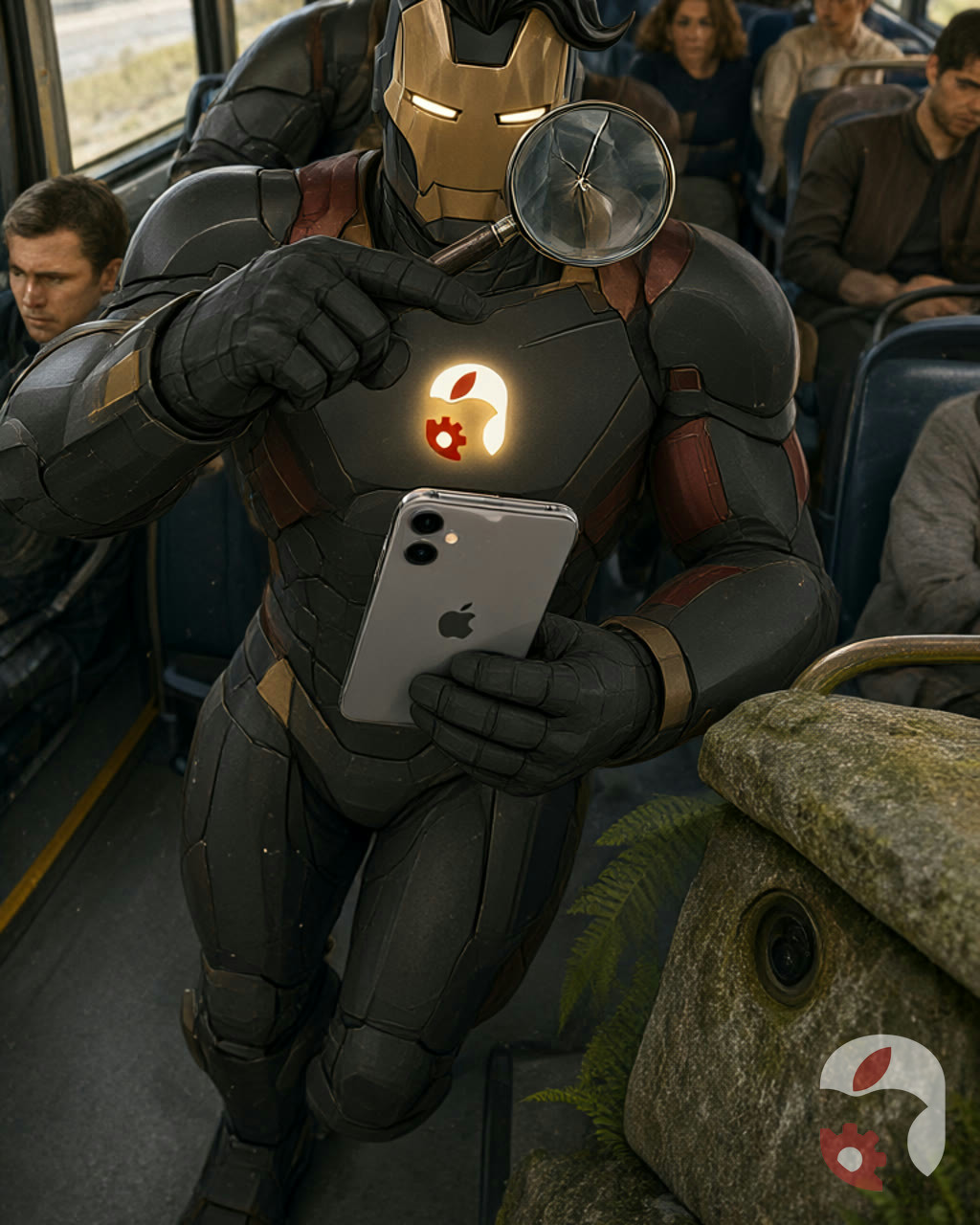
And on the iPhone Duo, which has only just come out and hasn't yet settled into anyone's pocket, it's especially so. Two spiderwebbed cracks that look identical spread along the hinge, but one Apple fixes at its own expense, and for the other you pay out of your own pocket. There is a difference. Let's take a look, before you reach for your receipt.
On 26 October Apple acknowledged the defect: at a certain angle the screen on the Duo cracks by itself, without drops or impacts. That is a warranty case. But the confusion starts where the brand-new smartphone has already been on the floor, and the owner is quick to blame the factory for everything. It's like with a person — what matters is not what hurts, but where it comes from.
Sign one: the shape of the crack. A factory defect almost always runs straight along the hinge, as if someone drew a line with a ruler. A drop produces chaos — radiating spokes, a pit-shaped chip, branches off to the sides.
Sign two: the point of entry. A crack after an impact has an epicentre, a place from which everything spread. A warranty case has none — just a long, stretching fissure with no beginning and no end.
Sign three: the cleanliness of the surface. The Apple defect looks like a thin hair under the glass, with no dent and nothing to catch a fingernail on. A drop always leaves an external trace: a scratch, scuffing, a burr along the edge.
It sounds simple, but by eye, without a loupe and experience, it's easy to get wrong. You can end up paying for someone else's manufacturing fault, or the other way round — argue with the warranty and be left with nothing. We sniff this out every day, so if there's already a crack on your Duo — don't sit there guessing over it, bring it in to be looked at. Sometimes two breaks that look identical decide two completely different fates, and the hero in armour can see better whose is whose.