
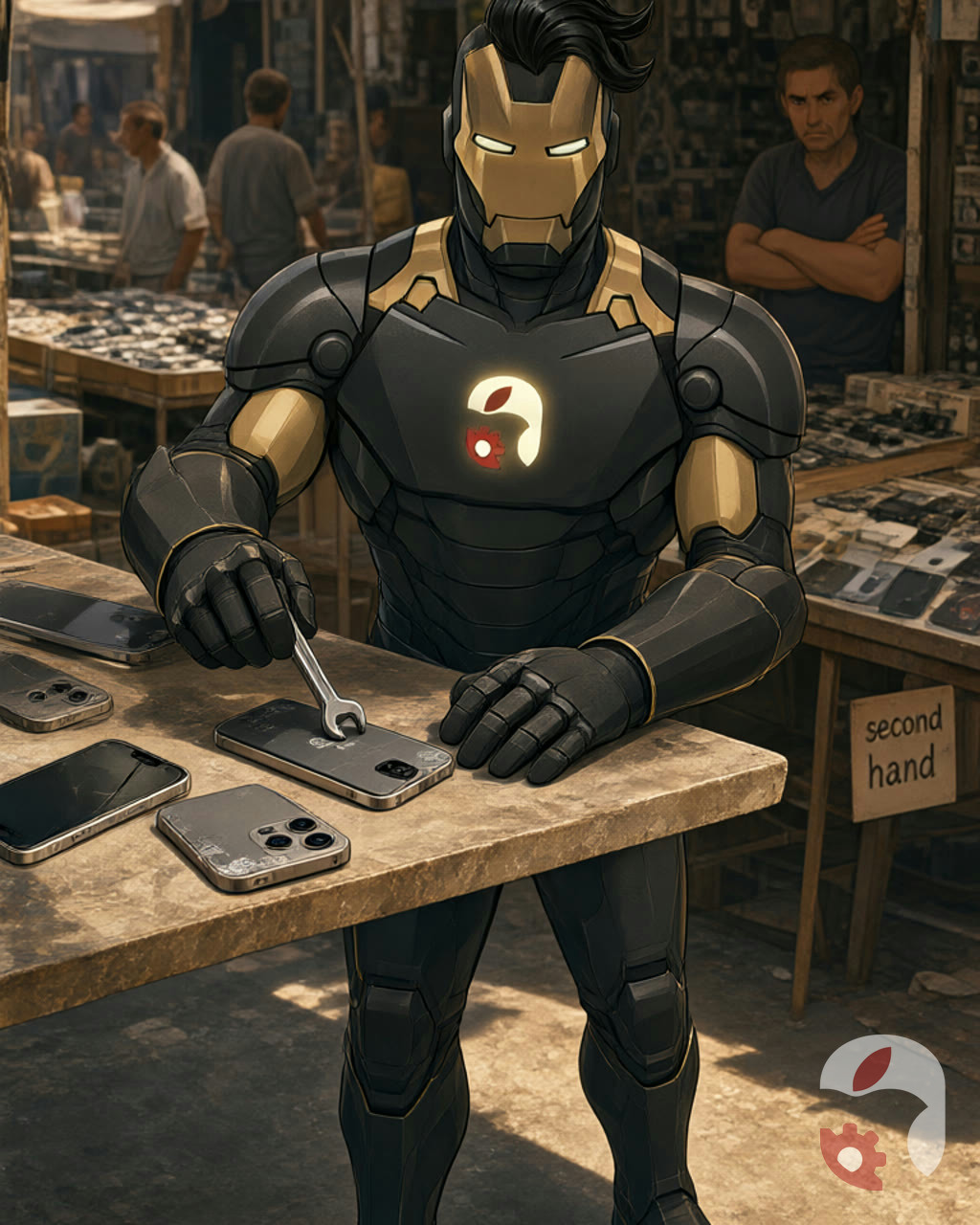
Sound familiar? At that moment the owner faces the classic choice: repair it, sell it as is and buy another, or pay over the odds for a new one. It is easy to waste money on emotion, so let's do the sums calmly, using one specific example.
First, the combination of a broken display and a tired battery. These are the two most common jobs in any repair shop. The bad news for wishful thinking: you cannot simply fit new glass, the display module is replaced as a whole. The good news: on the 13th model it is precisely the display and the battery that are replaced fastest, and afterwards the phone can comfortably be used for another couple of years. This is not the kind of repair after which the phone becomes like a relative claiming an important file has been lost — on the contrary, it is mechanical and predictable.
Now the market. A refurbished second-hand option usually looks tempting: you pay a little more than the cost of the repair and get a whole device in your hands. But there is a catch: you are buying someone else's battery with an unknown amount of life left, a display that may already have been replaced, and a body that has been washed under pressure of stories. The final saving melts away at the very first battery replacement. And a new iPhone is simply head and shoulders above in price — and that is appropriate when your current smartphone has already served its time, not when it suits you overall.
Here is the point. Before deciding the fate of a particular iPhone 13, it needs to be brought in for diagnostics. To see what besides the display and battery is living its own life, and to say honestly how much repair the internals are worth. Sometimes it pays to invest and keep going, sometimes to take a working option as is. Our hero comes out in armour precisely for that: to open it up, take a look and do the sums so that you do not have to take anyone's word for it.